A Five-Minute Reset Between Scenes
A five-minute reset between scenes turns one audience-facing observation into a clear handoff, so the next scene starts with a useful focus instead of leftover notes.
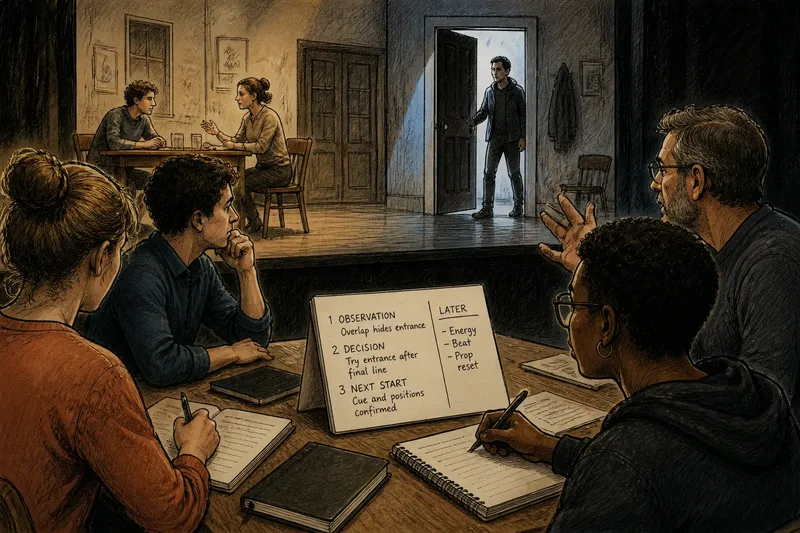
A five-minute reset between scenes should send the room into the next scene with a clear starting point, not a verdict on the scene that just ended. The useful handoff is brief: one audience-facing observation, a decision about whether it belongs in the next scene, and a clean start for the next run.
This routine is for rehearsals where scenes follow one another and the interval is short. It does not require the next scene to inherit the previous scene’s acting note; sometimes the only sensible transfer is a question for later and a fresh cue.
Use the reset to hand off attention, not solve the whole scene
Before rehearsal, tell the room that the reset has two jobs: capture one detail an audience could see or hear, then decide what the next scene needs from that information. The reset is not a review of everyone’s performance or a miniature production meeting.
Ask one person, such as the stage manager or director, to keep time and record the decision. A notebook or shared document is enough. Keep any issue that needs a longer conversation under a separate “later” heading.
That distinction matters because scenes do not automatically share a problem. A note about the previous scene may inform the audience’s experience of the transition, but it should not become an unrelated instruction for the performers entering the next one.
Let the completed scene settle before recording an observation
After the scene ends, allow a brief quiet pause while performers leave the moment and the room changes focus. The timekeeper can write down a few words without inviting a chorus of immediate judgments.
Collect observations about what a viewer could point to: a line that was difficult to hear, a turn that obscured a reaction, or a transition that made the next scene’s opening hard to follow. “The ending lacked energy” is an interpretation, not yet a usable observation.
Choose one detail based on its likely effect on the audience and its relevance to the handoff. If nothing from the previous scene affects the next one, record the observation for a later rehearsal and begin the next scene on its own terms.
Decide what, if anything, crosses into the next scene
There are three useful outcomes. The observation may call for a small adjustment to the transition, it may prompt a specific focus in the next scene, or it may belong only to the previous scene and need no immediate action.
- Check: The previous scene ends with a sound or movement that overlaps the next scene’s opening. If the overlap hides the next scene’s first cue, then adjust the handoff or cue timing; otherwise leave the transition as it is.
- Check: The next scene begins before the audience can register a visible change of place or focus. If the opening feels visually continuous by accident, then clarify the entrance, lighting, or actor focus; otherwise keep the existing opening.
- Check: A previous scene’s unresolved sound, prop, or position carries into the next setup. If it distracts from the next scene’s first action, then assign a clear reset action; otherwise do not add a transition task.
- Check: The audience-facing observation concerns only a moment inside the completed scene. If it does not affect the next scene or transition, then record it for that scene’s next rehearsal; otherwise state the specific connection before carrying it forward.
- Check: The next scene’s opening depends on a particular sound or line being heard. If the room arrangement or transition could mask it, then confirm the cue and listening conditions before the run; otherwise start without an extra note.
- Check: The proposed handoff contains several separate instructions. If the group cannot state the priority in one sentence, then choose the one audience-facing issue that matters now and park the rest; otherwise carry the concise instruction into the next run.
Say you have rehearsed a scene at a table, followed by a scene that opens with a performer entering through the same doorway. The room observes that the first scene’s final line continues under the entrance and makes the new scene’s opening difficult to hear. The timekeeper records the observation; the director asks whether the overlap is intentional; the group decides to try the entrance after the line ends. The next run can show whether the opening becomes easier to follow, while the previous scene’s other notes stay parked.
Keep the handoff concrete and small
If the observation calls for a task in the next scene, phrase it as one action or focus the performers can carry into a run. “Make the opening clearer” is too broad; “hold the entrance until the final line ends” names a choice the room can see and hear.
For a transition adjustment, name who does what and when. Avoid attaching an acting interpretation to a practical cue unless the scene needs both; otherwise, the handoff becomes a bundle of instructions with no clear priority.
Have the person responsible repeat the decision in plain language. If the retelling adds several new ideas, narrow the handoff before the next scene starts. The pause is for deciding what crosses the boundary, not for developing a full staging plan.
Start the next scene without reopening the previous one
Confirm the next scene’s starting positions, first cue, and any agreed transition change. Then run without stopping to repair every detail. The purpose is to see whether the handoff is legible in context, not to turn the opening into a sequence of corrections.
After the run, check only the point the room chose to carry forward. If the entrance now reads clearly, record that result. If not, note what remains difficult and schedule a focused discussion at a suitable pause rather than adding hurried directions.
What should cross from one scene to the next?
Should an acting note from the last scene carry into the next?
Only if it has a clear connection to the next scene, such as a continuing relationship or a visible transition. Otherwise, keep the note with the scene where the audience-facing detail occurred.
What if the next scene has a different problem?
Let it begin with its own cue and immediate need. Record the earlier observation for the next rehearsal of that scene instead of forcing a connection.
What if the room disagrees about the transition?
State the observable difference each person noticed, then choose one version to try in the next run. Save the wider artistic discussion for a longer pause if the trial does not settle the question.
What if the reset is interrupted?
Write down the observation and the decision still needed, then complete the handoff at the next suitable pause. A rushed instruction delivered over a room change is not especially useful merely because it arrived on schedule.
Record the decision so the next rehearsal can use it
Keep a compact note with the scene pair, the audience-facing observation, the handoff decision, and what to watch for. This makes it clear whether the issue belongs to the transition or to one scene alone.
For the doorway example, the note could read: “Table scene into doorway scene: final line masks the entrance cue. Try entrance after line ends. Watch whether the new opening is audible.” The record preserves the decision without collecting every opinion expressed during the pause.
A five-minute reset between scenes earns its place by making the boundary between scenes clearer. The most useful handoff may be an adjustment, a focused cue, or a decision to carry nothing forward; the room should know which before the next scene begins.